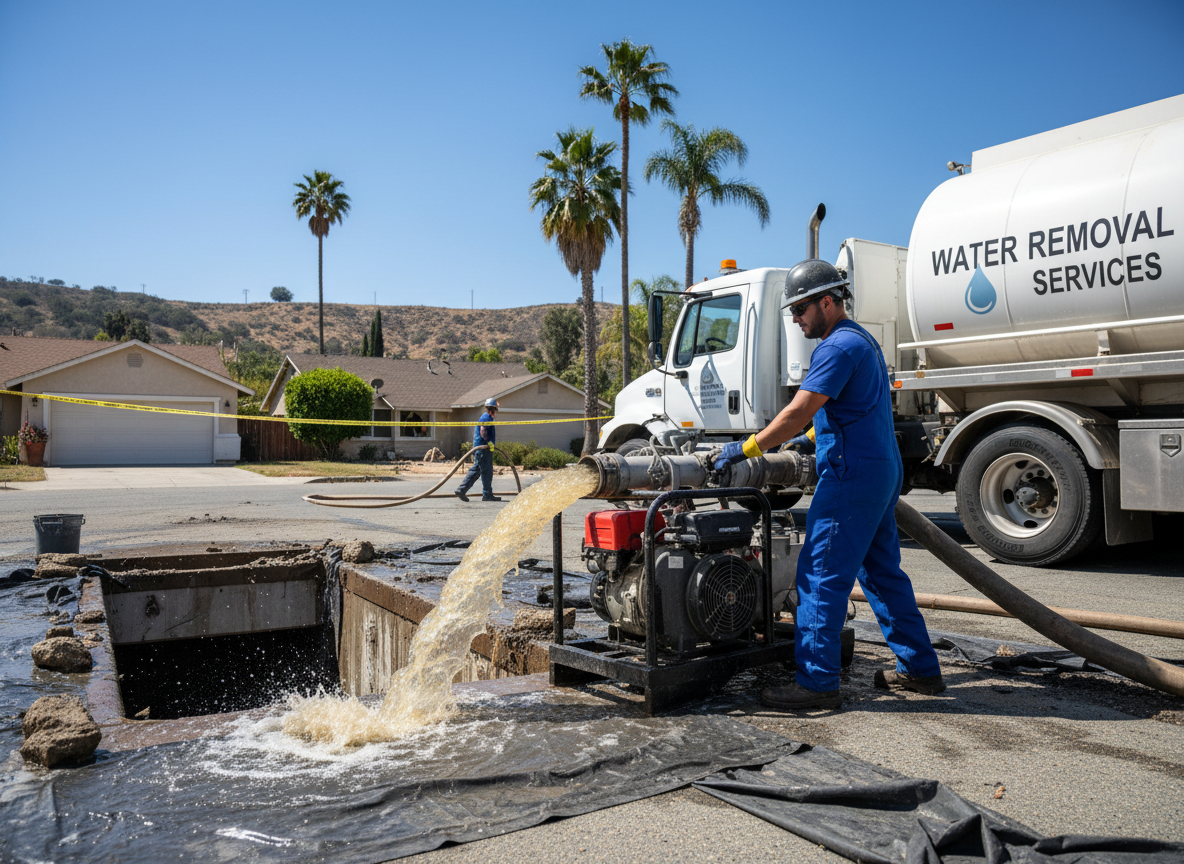
Water extraction in Chatsworth often starts with older ranch homes built before 1970 in Downtown Chatsworth and West Chatsworth where slab foundations and narrow crawl spaces trap water from roof leaks or overflowing drains. Mediterranean climate patterns mean sudden winter rains hit hard after long dry summers, sending runoff toward low spots near Santa Susana Pass State Historic Park. Technicians must account for the mix of stucco exteriors and original plumbing that can fail without warning, requiring high-volume pumps and moisture meters before any drying begins.
Jobs near Chatsworth Park South frequently involve yards with heavy clay soil that refuses to drain quickly, pushing water under patios and into garages. Crews from our Devonshire Street location carry portable extractors rated for both residential slabs and light commercial spaces common along Devonshire Boulevard. Los Angeles County codes require documented moisture readings below 15 percent before walls can be closed, so extraction stops only after infrared scans confirm no hidden pockets remain in insulation or under flooring.
Serving calls from Canoga Park and Simi Valley means handling varied terrain where hillside properties send water toward flatter lots in Chatsworth. Extraction teams prioritize removing water within the first 24 hours to limit swelling in hardwood floors and drywall common in mid-century homes. Equipment choices shift with each property because concrete block foundations in West Chatsworth retain moisture differently than raised wood floors found closer to Orcutt Ranch.
Technician insight
In Chatsworth the thing that catches most people out with water extraction is the way winter rain pools against the clay soil around Chatsworth Park South and then migrates under older slab homes in West Chatsworth, so what looks like a small garage puddle often means pulling baseboards and checking behind kitchen cabinets two rooms away.
Garage Flood After Winter Storm
Heavy rain sent water under the garage door of a 1960s ranch in West Chatsworth. Extraction revealed water had traveled under the slab into the adjacent laundry room. Pumps cleared the standing water the same night, followed by targeted drying that kept the original hardwood from buckling.
How it works
- 1
Initial Assessment
Technicians arrive within hours, map water migration through the structure, and identify affected materials using moisture meters and infrared cameras.
- 2
Water Removal
High-capacity pumps and extractors pull standing water from floors, carpets, and wall cavities while protecting unaffected areas.
- 3
Targeted Drying
Air movers and dehumidifiers are placed based on readings, with daily monitoring to track progress until levels meet county standards.
- 4
Final Verification
Final scans confirm moisture is gone, followed by a walkthrough with the homeowner before equipment is removed.
Pricing
Upfront quotes follow inspection; price depends on water volume, number of affected rooms, and whether hidden cavities require extra time.