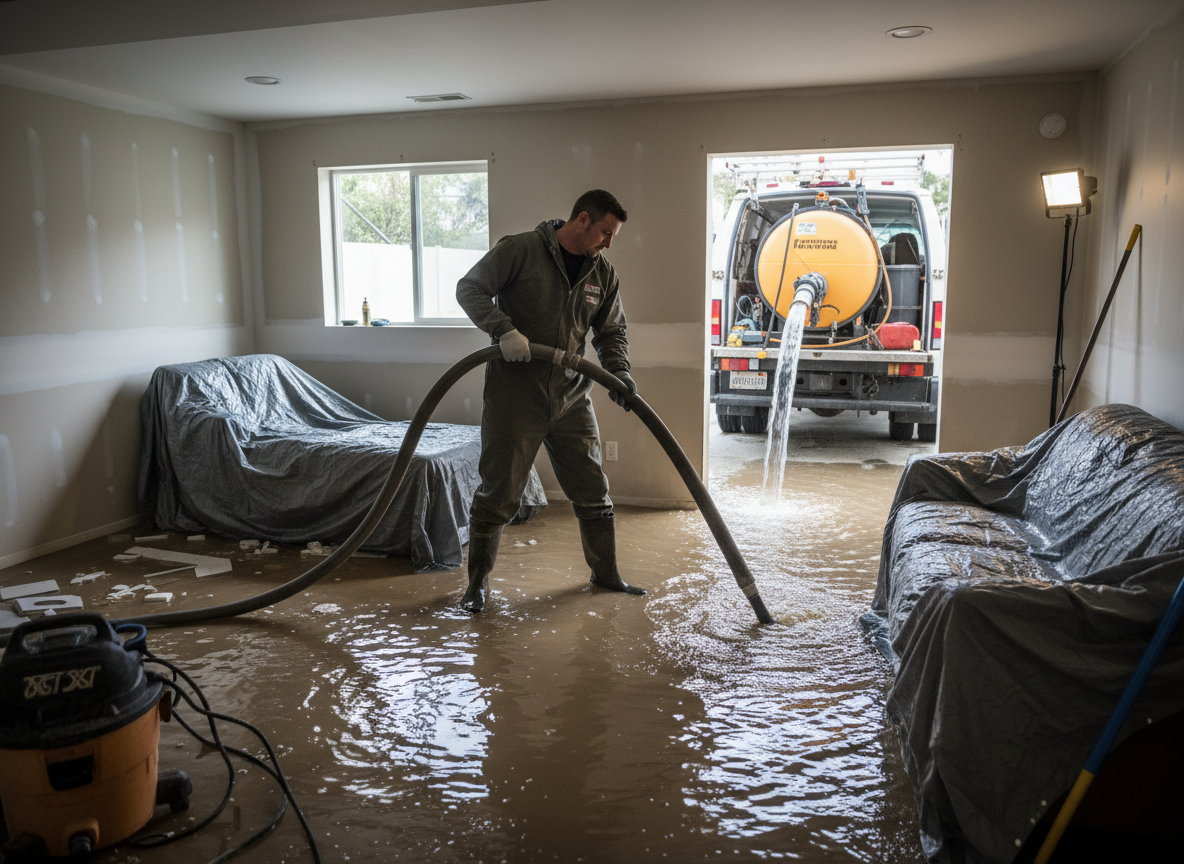
Water extraction in Chatsworth often starts with slab-on-grade homes built from the 1950s through the 1980s that sit on expansive clay soils common across the San Fernando Valley. When a supply line bursts or a roof leak from winter rains saturates the subfloor, moisture travels under the slab and into adjacent walls faster than in newer construction. Technicians must pull carpet and padding immediately, then use high-velocity air movers and dehumidifiers sized for the square footage while monitoring moisture meters in the concrete to prevent hidden mold growth behind baseboards.
Mediterranean climate patterns mean sudden heavy rain can overwhelm drainage around properties near Santa Susana Pass State Historic Park and Orcutt Ranch where slopes direct runoff toward foundations. In West Chatsworth and neighborhoods bordering Northridge and Canoga Park, older irrigation systems tied to the original agricultural lots frequently leak under patios. Extraction crews stage equipment on driveways to avoid damaging drought-hardened landscaping and use moisture barriers to keep extracted water from re-entering the soil around the structure.
Extraction work also accounts for the mix of single-story ranch homes and two-story tract houses found throughout Downtown Chatsworth. In two-story buildings, water from upper bathrooms travels down interior walls and pools above lower cabinets, requiring removal of toe-kicks and sometimes sections of drywall. Crews document every step with photos because Los Angeles County inspectors may review properties after significant events, and accurate records help homeowners with insurance claims without delays.
Portable extraction units with 200-300 CFM ratings handle most residential jobs while larger truck-mounted systems are reserved for commercial spaces or when water has reached multiple rooms. After removal, crews test for remaining moisture in hardwood floors common in Chatsworth Park homes and recommend temporary relocation of furniture to allow proper drying before any reconstruction begins.
Technician insight
In Chatsworth, the thing that catches most people out with water extraction is how quickly moisture moves under the slab in our clay-heavy soil, especially in 1960s homes near Chatsworth Park South. Homeowners often stop at the visible puddle and miss the water that has wicked into the drywall behind cabinets, which later shows up as musty smells once summer heat returns.
Pipe Burst in West Chatsworth Ranch Home
A supply line under the kitchen failed overnight in a 1972 single-story home off Devonshire. Water traveled under the slab into the adjacent hallway and laundry room. We extracted standing water, pulled saturated carpet, and ran drying equipment for four days while checking moisture levels in the concrete. The homeowner avoided mold issues and returned furniture once readings stabilized.
How it works
- 1
Initial Assessment
Technician arrives within the hour, identifies water source and category, and maps affected rooms in the Chatsworth property.
- 2
Water Removal
Industrial extractors pull standing water from carpets, hard surfaces, and subfloors while protecting nearby landscaping.
- 3
Drying and Monitoring
Air movers and dehumidifiers run continuously with daily moisture readings until levels return to normal for Los Angeles County construction.
- 4
Final Documentation
Photos and meter readings are compiled for the homeowner and insurance adjuster before equipment is removed.
Pricing
Pricing depends on water volume, number of affected rooms, and whether hidden moisture requires wall or floor access; we provide an upfront scope after inspection.