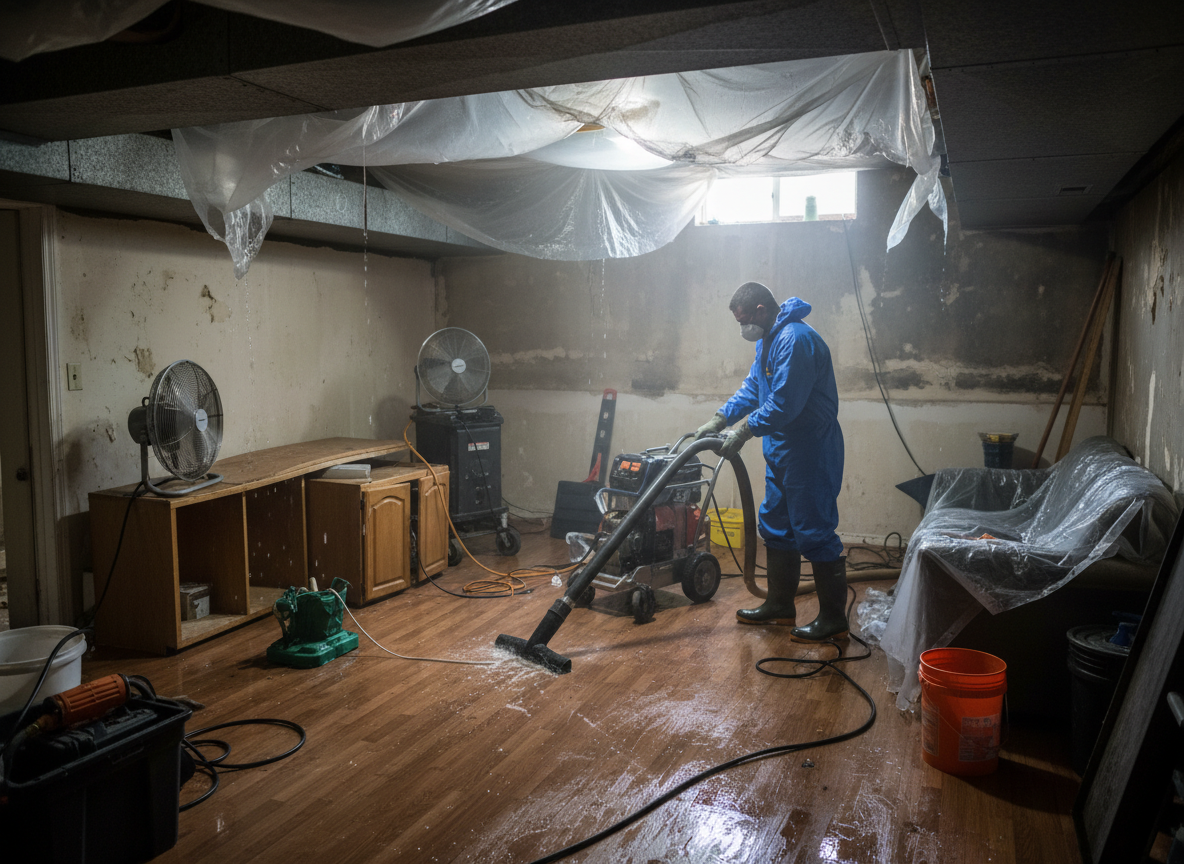
Chatsworth homes built in the 1960s and 1970s often feature stucco exteriors over wood framing with slab foundations that sit close to the clay-rich soil common around Chatsworth Park South. When water enters through roof penetrations or window seals, it travels along the slab edge and saturates the subfloor before homeowners notice. Restoration crews must pull baseboards early and use moisture meters on the concrete because trapped water here leads to hidden mold growth within days even in the dry summer months.
The Mediterranean climate brings sudden winter rains that overwhelm the drainage around Santa Susana Pass State Historic Park and send runoff toward lower-lying streets in West Chatsworth. Older cast-iron plumbing in these neighborhoods corrodes from the inside, creating slow leaks that pool under kitchen slabs. Technicians routinely cut exploratory openings in drywall to trace the full extent of migration because surface drying alone fails when water has wicked into the slab insulation layer.
Properties near Orcutt Ranch and along Devonshire Street frequently experience sewer backups after heavy rain because the terrain slopes toward the street and older lateral lines lack proper cleanouts. Extraction must include negative air machines to prevent cross-contamination into living spaces. Crews also monitor humidity levels for several days after drying because the mild winters keep ambient moisture higher than expected, allowing secondary damage to return if dehumidification stops too soon.
Irrigation and Runoff Realities
Many West Chatsworth ranch homes sit on lots with automatic sprinklers tied to the same meter as the house. A cracked irrigation valve can run for weeks unnoticed, pushing water under the slab and into the garage. Restoration includes locating the valve shutoff and documenting the source so insurance adjusters see the distinction between sudden plumbing failure and gradual irrigation loss.
Technician insight
In Chatsworth, the thing that catches most people out with water damage restoration near me is the way clay soil around Chatsworth Park holds water against 1960s slab foundations in West Chatsworth. Homeowners often stop drying once the carpet feels dry, but the slab stays wet for weeks and feeds mold into the base of interior walls.
Slab Leak Under Kitchen in West Chatsworth
A homeowner in West Chatsworth noticed warm flooring near the sink. Inspection found a pinhole leak in copper supply line under the slab that had traveled toward the garage. Crew extracted water, dried the sub-slab area with targeted equipment, and replaced the damaged section of flooring. The home returned to normal use without mold issues despite the mild winter humidity.
How it works
- 1
On-Site Assessment
Technician arrives within hours, maps moisture with meters, and identifies affected materials in the specific neighborhood home.
- 2
Water Extraction
Remove standing water and pull saturated carpet or flooring before it affects nearby rooms in the older Chatsworth housing stock.
- 3
Drying and Monitoring
Place air movers and dehumidifiers, then return daily to check readings until drywall and slab reach dry standards.
- 4
Sanitizing and Restoration
Treat affected areas and replace removed sections so the home returns to pre-loss condition without lingering odors.
Pricing
Upfront quotes provided after inspection; final cost depends on square footage affected and materials removed.