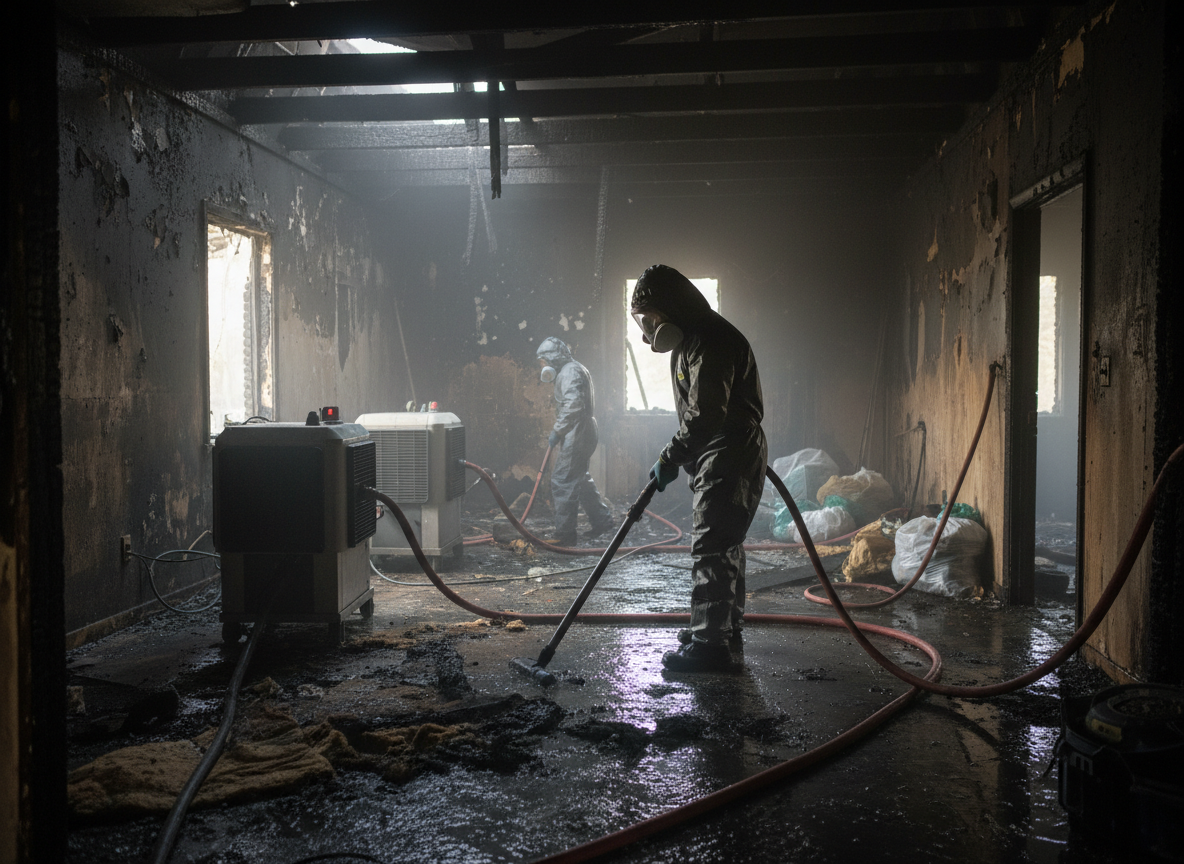
Fires in Chatsworth often involve water from Los Angeles County Fire Department suppression that soaks drywall, insulation, and subfloors in homes built from the 1960s onward in West Chatsworth and near Santa Susana Pass State Historic Park. Smoke and soot combine with that moisture to create hidden corrosion on copper pipes and electrical boxes, especially in single-story ranch houses common around Orcutt Ranch. Technicians must remove baseboards and drill inspection holes to trace migration paths before mold sets in during the mild winter rains that follow hot, dry summers.
Mediterranean climate patterns mean fire season peaks when vegetation in Chatsworth Park South is tinder-dry, sending embers into attics of older homes in Downtown Chatsworth. Once water is introduced, it pools in low spots created by the area's slight slope toward the Santa Susana foothills. Remediation requires targeted drying with air movers and dehumidifiers calibrated for the thick stucco walls typical here, plus antimicrobial treatment on wood framing to prevent secondary damage that spreads to neighboring properties in Canoga Park or Northridge.
After initial extraction, crews test moisture levels in concrete slabs common in Simi Valley-adjacent homes and document readings for insurance adjusters. Edge cases include hidden water behind kitchen cabinets in 1970s tract homes near Devonshire Street, where particleboard swells and off-gasses. Proper sequencing prevents warping of hardwood floors found in some Chatsworth Park residences and avoids voiding manufacturer warranties on appliances affected by smoke residue mixed with water.
Technician insight
In Chatsworth, the thing that catches most people out with water damage remediation after fire is how quickly moisture travels through the unsealed stucco and older lath-and-plaster walls in West Chatsworth homes near the Santa Susana Pass, especially after a summer fire when the next winter rain pushes it deeper into the slab.
Attic Soak in Chatsworth Park Home
A fire in a single-story house near Chatsworth Park South sent suppression water into the attic. We found saturated insulation and ceiling joists that had wicked moisture down into bedroom walls. Extraction and targeted drying prevented mold growth before the mild winter rains arrived.
How it works
- 1
Emergency Assessment
Arrive within hours to document water intrusion from fire suppression in Chatsworth homes and map affected zones using moisture meters.
- 2
Water Extraction
Remove standing water from slabs, carpets, and wall cavities before it migrates into neighboring rooms common in older West Chatsworth layouts.
- 3
Drying and Monitoring
Place equipment and return daily to check readings until drywall and framing in structures near Chatsworth Park South reach safe levels.
- 4
Sanitization and Restoration
Apply treatments to combat soot and mold risk, then coordinate repairs so homes return to pre-loss condition without lingering odors.
Pricing
Upfront quotes after inspection; cost varies with square footage affected and whether hidden damage exists behind stucco or in attics.