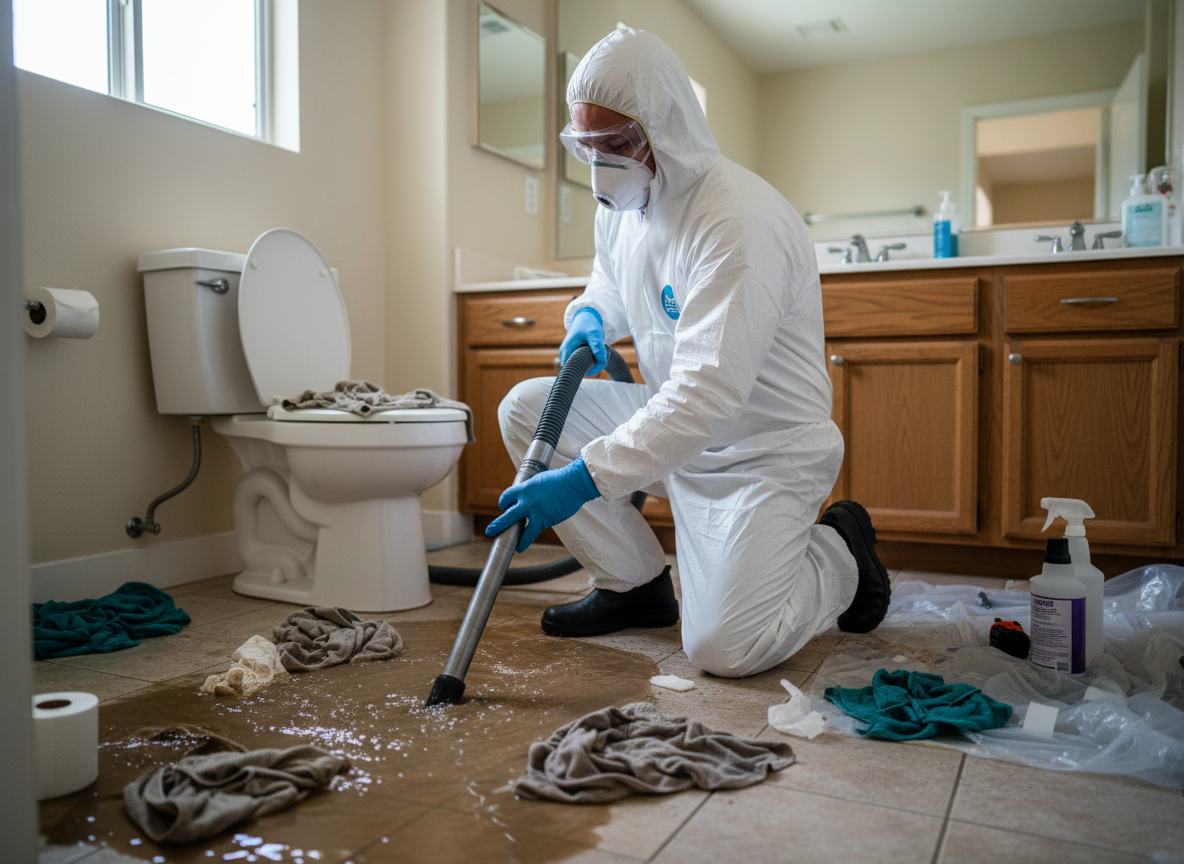
Toilet overflows in Chatsworth often involve Category 3 water that requires full containment and antimicrobial treatment before any drying begins. Older ranch homes built in the 1950s and 1960s around Chatsworth Park South and West Chatsworth commonly feature slab foundations and original cast-iron drains that crack or separate, allowing contaminated water to migrate under flooring and into wall cavities. Technicians must remove baseboards, pull carpet pads, and use moisture meters to trace hidden migration paths that the region's hot, dry summers can mask until mold appears weeks later.
In Los Angeles County neighborhoods like Downtown Chatsworth, rapid extraction is critical because mild winters still bring enough humidity to slow evaporation in enclosed bathrooms. After pump-out, crews apply EPA-registered disinfectants to all affected surfaces and use air movers plus dehumidifiers sized for the home's square footage. Porous materials such as hardwood in Orcutt Ranch-era properties are often unsalvageable once sewage water has wicked into the grain, requiring selective demolition that preserves structural integrity while meeting local building codes for waste-water incidents.
Edge cases include overflows that reach adjacent rooms through door thresholds or HVAC returns common in single-story homes near Santa Susana Pass State Historic Park. Technicians isolate these systems immediately to prevent aerosolized contaminants from spreading. Final clearance involves ATP testing and documentation for insurance carriers, ensuring every step from initial assessment at the 21701 Devonshire St base through final drying meets the realities of Chatsworth's Mediterranean climate and aging housing stock.
Technician insight
In Chatsworth, the thing that catches most people out with toilet overflow cleanup is the slab foundations common in 1960s homes around Chatsworth Park and West Chatsworth, where water travels under the concrete and stays hidden until the dry Santa Ana winds later pull moisture back up and trigger hidden mold growth.
Overflow into Adjacent Hallway
A toilet overflow in a 1962 ranch home near Downtown Chatsworth sent water under the bathroom door into the hallway. We found the water had wicked into the original oak flooring and under the slab edge. Extraction, targeted demolition of the affected base, and three days of drying prevented mold while preserving the rest of the floor.
How it works
- 1
Assessment and Containment
Technicians arrive within the hour, identify water category, set up containment barriers, and protect unaffected areas in the home.
- 2
Water Extraction
Industrial pumps and wands remove standing water from floors, toilets, and any subfloor cavities before migration worsens.
- 3
Cleaning and Disinfection
All surfaces receive EPA-registered antimicrobials; unsalvageable materials are removed and bagged for proper disposal.
- 4
Drying and Monitoring
Air movers and dehumidifiers run while moisture readings are tracked daily until levels match unaffected areas of the structure.
- 5
Final Clearance
ATP testing confirms sanitation; a written report is provided for insurance and homeowner records.
Pricing
Cost depends on square footage affected, depth of water migration into slabs or walls, and whether hardwood or carpet must be removed; we provide upfront written quotes after inspection.