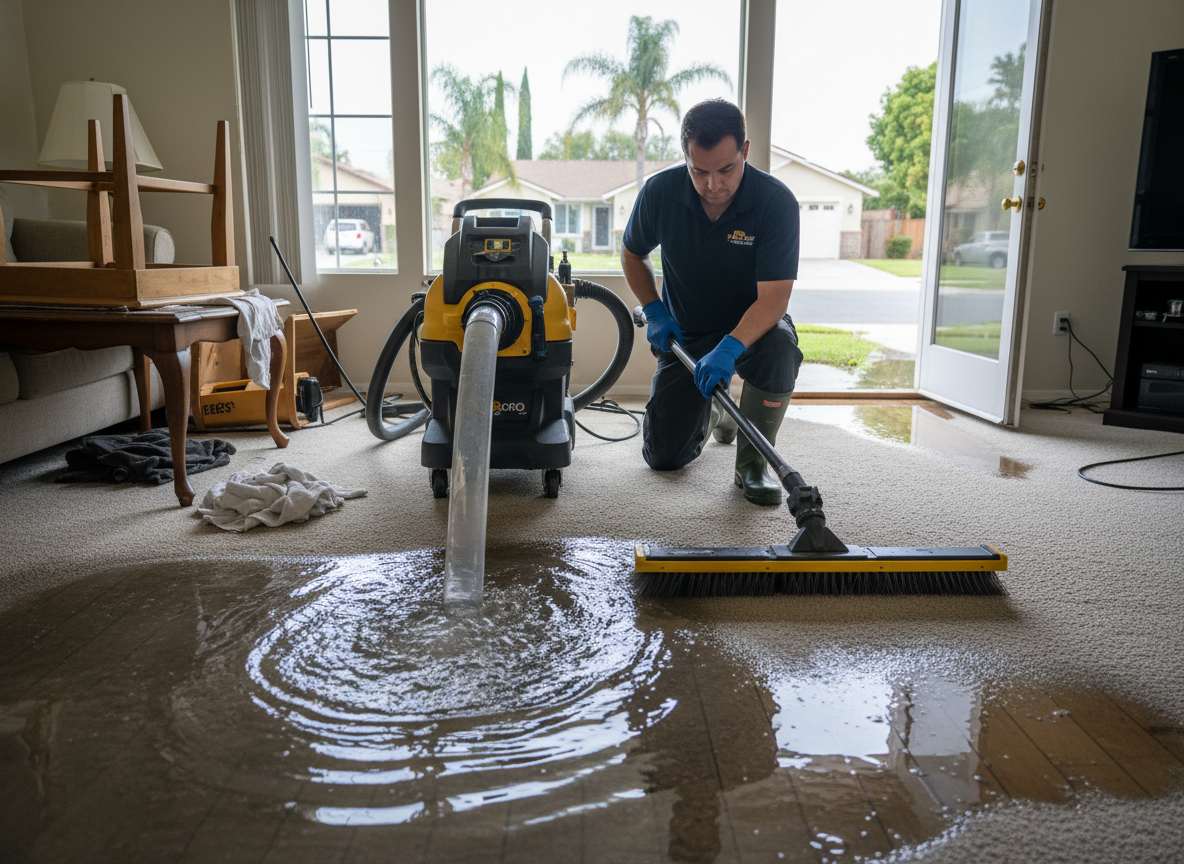
Rapid water extraction in Chatsworth targets standing water before it migrates into the stucco walls and slab foundations common in 1960s-1980s ranch homes throughout West Chatsworth and near Orcutt Ranch. Hot dry summers leave soil cracked, so winter rains from the Mediterranean pattern can send sudden runoff down Santa Susana Pass slopes into basements and garages. Technicians use truck-mounted vacuums and submersible pumps sized for the volume, pulling water from carpet pads, hardwood, and underlayment while monitoring moisture meters to avoid pulling structural drywall in older Northridge-adjacent builds. Delaying extraction allows mold to colonize within 48 hours in the mild winter temperatures typical here.
Los Angeles County building codes require documentation of moisture levels before any finish work, so crews log readings at multiple depths in concrete and framing. In Chatsworth Park homes, hillside drainage often funnels water under patios, creating hidden pockets that standard shop vacs miss. Portable extractors with crevice tools reach behind toilets and under kitchen islands where appliance leaks spread fastest. Nearby Canoga Park and Simi Valley jobs show the same pattern: once water reaches the vapor barrier, extraction must continue until readings drop below 15 percent to prevent recurring issues in the dry season.
Edge cases include sewage-tinged water from older sewer lines in Downtown Chatsworth, requiring PPE and separate containment to avoid cross-contamination with clean extraction equipment. Technicians also watch for electrical hazards in homes built before updated grounding standards, shutting off power at the panel before placing pumps near outlets. After bulk removal, air movers are positioned to create negative pressure that pulls remaining moisture toward the equipment rather than deeper into insulation.
Technician insight
In Chatsworth, the thing that catches most people out with Rapid water extraction is how the clay-heavy soil around West Chatsworth and Chatsworth Park holds winter rain against older slab foundations, so surface water disappears but moisture stays trapped under the concrete for weeks unless you pull it from the edges with the right crevice tools.
Garage flood after winter rain
Water entered a 1970s ranch garage in West Chatsworth from runoff off Santa Susana Pass. We found saturation under the slab edge and in drywall behind stored boxes. Extraction with portable units and edge tools removed the bulk in four hours, then we set drying equipment that kept readings in the safe range before any mold started.
How it works
- 1
On-site assessment
Technician arrives within the hour, maps water migration through Chatsworth homes using moisture meters, and identifies affected zones near slabs or crawl spaces.
- 2
Water removal
Industrial vacuums and pumps extract standing water from floors, carpets, and wall cavities while containing any contaminated runoff.
- 3
Moisture verification
Readings are taken at multiple depths until levels meet drying standards for Los Angeles County properties.
- 4
Equipment setup
Air movers and dehumidifiers are placed to finish drying without spreading moisture into unaffected rooms.
Pricing
Pricing varies by water volume, depth of saturation in slab homes, and whether sewage is present.