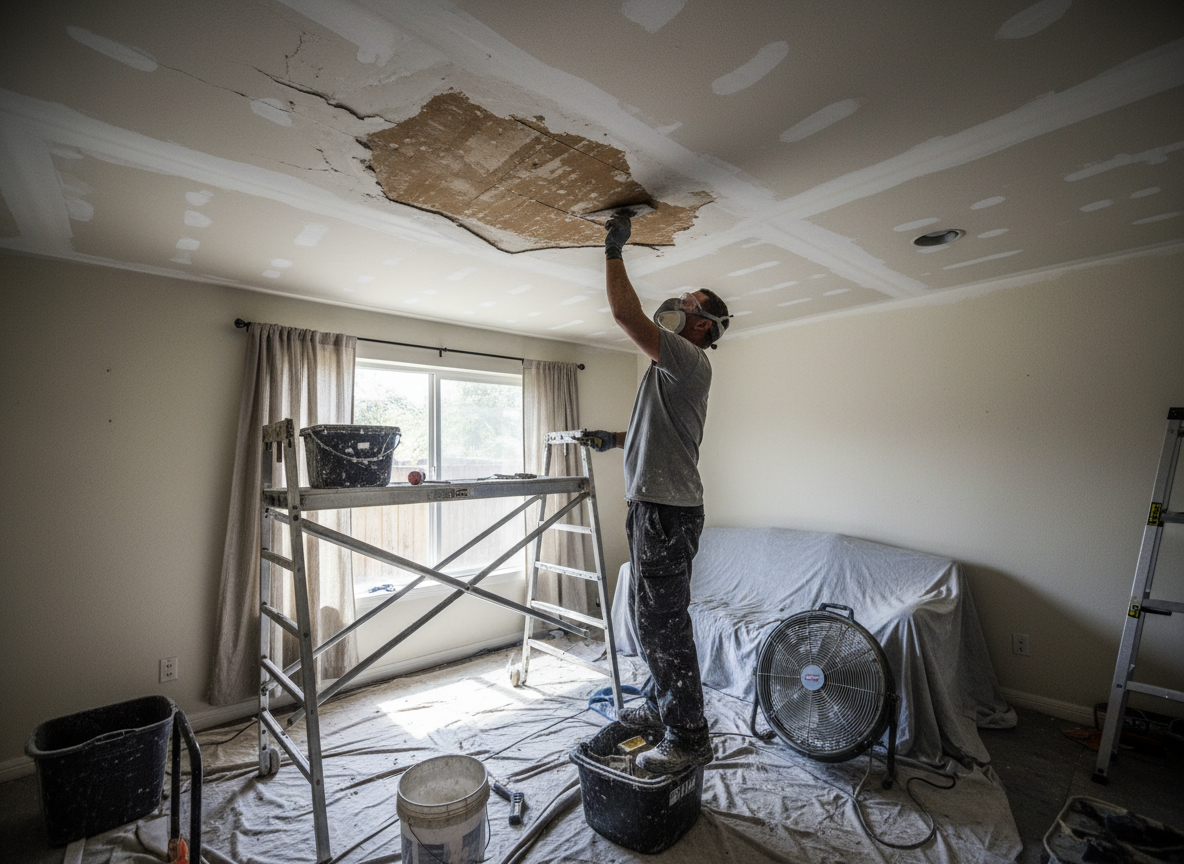
Ceiling water damage in Chatsworth homes often starts from roof penetrations or upstairs plumbing in the area's 1960s to 1980s housing stock near Orcutt Ranch and Santa Susana Pass State Historic Park. Technicians use moisture meters to trace hidden saturation along joists before any visible sagging appears, then remove affected drywall or plaster sections without disturbing sound material. In the hot dry summers, rapid surface drying can mask deeper moisture that later causes mold along seams, so full cavity drying with air movers and dehumidifiers is required before patching.
Winter rains in this Mediterranean climate push water through older flashing around chimneys and skylights common in West Chatsworth properties, allowing it to travel laterally under the roof deck. Edge cases include stucco exteriors that channel water behind the ceiling plane and soil movement near Chatsworth Park South that shifts foundations and cracks supply lines above ceilings. Repairs must match existing textures and fire-rated assemblies to stay code compliant in Los Angeles County without unnecessary demolition.
Homeowners sometimes attempt cosmetic paint fixes after a leak stops, but trapped moisture in insulation leads to recurring stains and structural weakening. Proper protocol includes source identification, selective demolition, antimicrobial treatment where needed, and reinstallation with matching materials. Work in neighborhoods bordering Simi Valley and Canoga Park also accounts for shared drainage patterns that can reintroduce water if neighboring properties have unresolved issues.
Technician insight
In Chatsworth, the thing that catches most people out with Ceiling water damage repair is how winter rains pool on flat sections of older roofs near Chatsworth Park before finding seams, then travel along joists in 1970s homes so the visible stain ends up far from the actual entry point.
Ceiling stain after winter rain in Downtown Chatsworth
A homeowner in Downtown Chatsworth noticed a spreading brown stain on the kitchen ceiling following several days of rain. Inspection revealed a cracked roof vent allowing water to travel under the deck and saturate insulation above the drywall. Damaged sections were removed, the cavity dried completely, and the ceiling was rebuilt with new drywall and matching texture.
How it works
- 1
Source Identification
Inspect roof, plumbing, and HVAC above the ceiling using moisture meters and thermal imaging to locate the leak entry point.
- 2
Containment and Drying
Isolate the affected area, extract standing water if present, and deploy drying equipment to remove moisture from cavities and insulation.
- 3
Selective Removal
Cut out saturated drywall or plaster sections while preserving sound material and checking for hidden mold growth along joists.
- 4
Repair and Finish
Install new matching materials, texture to blend with existing ceiling, and apply paint or finish after full drying verification.
Pricing
Upfront quotes provided after on-site inspection; cost varies with damage extent, ceiling height, and material type.