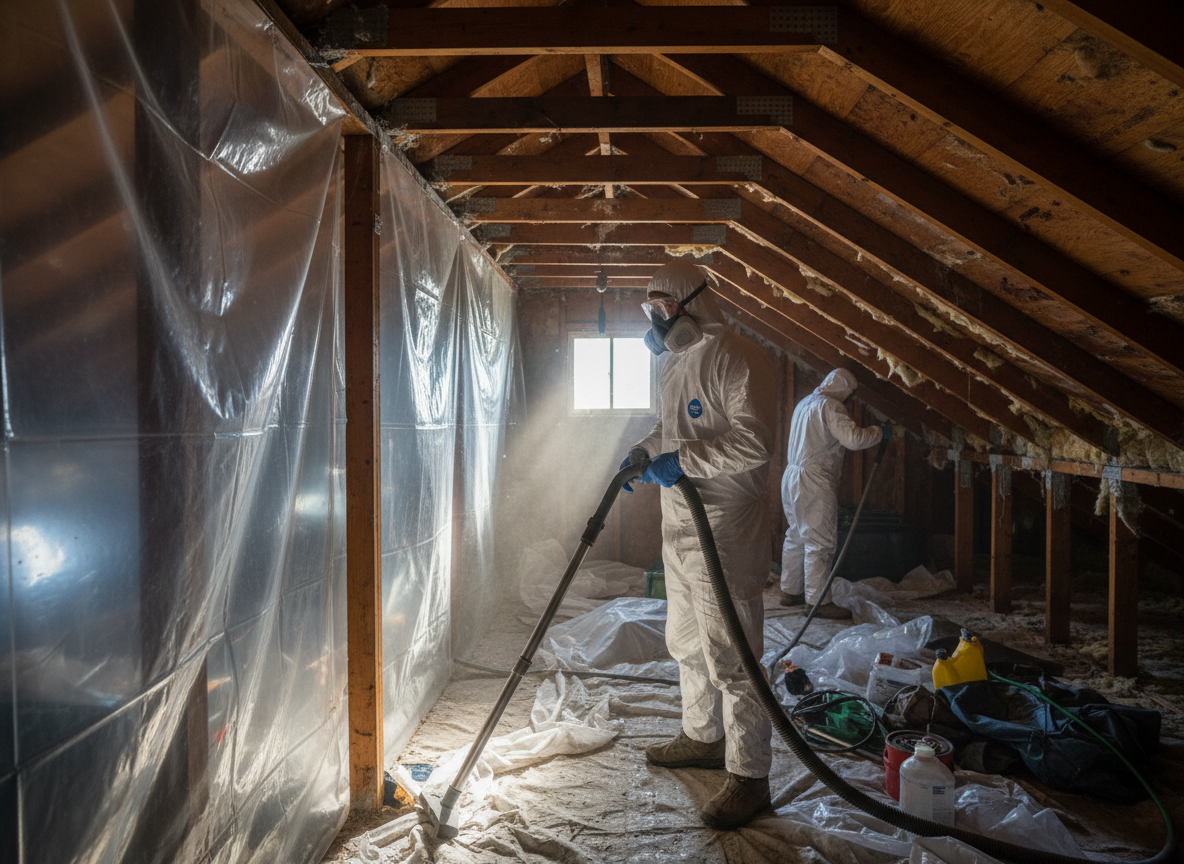
Chatsworth homes built from the 1950s through 1970s in neighborhoods like West Chatsworth and near Chatsworth Park South often have limited attic ventilation that traps moisture during the mild winter months. Roof leaks around Santa Susana Pass State Historic Park properties allow water to pool in insulation, creating hidden mold colonies that spread through HVAC returns. Remediation requires full containment barriers, negative air machines, and removal of affected cellulose or fiberglass without disturbing asbestos-containing materials common in that era's construction.
The Mediterranean climate brings intense summer heat that can push attic temperatures above 130 degrees, drying surface mold but leaving roots embedded in wood sheathing. Technicians must inspect rafters and trusses for structural softening before any cleaning, especially in homes near Orcutt Ranch where mature trees shed debris that clogs gutters and forces water under shingles. HEPA vacuuming and antimicrobial treatments follow, followed by improved ridge and soffit venting to prevent recurrence in Los Angeles County code-compliant work.
Access challenges appear frequently in single-story ranch homes throughout Downtown Chatsworth where low-pitch roofs limit crawl space. Mold often travels into wall cavities when not contained early, requiring additional demolition that homeowners in Canoga Park and Simi Valley border areas frequently underestimate. Final clearance testing uses both visual inspection and air sampling to confirm spore counts return to outdoor baseline levels before insulation replacement.
Water intrusion from Santa Ana wind-driven rain or plumbing vents in older Chatsworth Park homes demands source repair before any remediation begins. Skipping this step allows mold to return within a single season, particularly when cellulose insulation retains moisture longer than synthetic alternatives. Proper disposal of contaminated materials follows Los Angeles County guidelines to avoid cross-contamination during transport.
Technician insight
In Chatsworth, the thing that catches most people out with attic mold remediation is older ranch homes in West Chatsworth where low-pitch roofs and original fiberglass insulation trap condensation from the mild winters. Homeowners often think a quick bleach spray will fix it, but the roots stay in the sheathing and travel into wall tops when the summer heat expands the air.
West Chatsworth Ranch Home Attic Mold
A homeowner in West Chatsworth noticed musty odors after winter rains. Inspection revealed roof leaks around plumbing vents soaking cellulose insulation in a 1960s ranch. We contained the attic, removed the wet material, treated the rafters, and coordinated new ridge venting. Clearance tests passed and the odor did not return.
How it works
- 1
Inspection and Moisture Mapping
Technicians enter the attic through existing access points or create safe openings to map water stains and test insulation moisture levels with meters.
- 2
Containment Setup
Plastic sheeting and negative air machines isolate the work zone to prevent spores from migrating into living spaces below.
- 3
Removal and Cleaning
Affected insulation is bagged and removed, followed by HEPA vacuuming of rafters, sheathing, and HVAC components.
- 4
Source Repair and Drying
Roof leaks or vent issues are addressed, then dehumidifiers and air movers dry remaining wood before treatment.
- 5
Clearance and Restoration
Air sampling confirms safe levels, then new insulation and ventilation upgrades restore the attic to code standards.
Pricing
Cost depends on attic size, mold extent, and required demolition; we provide upfront written quotes after inspection.